The story so far

The summer of 2014
I am doing something during this holiday that I normally don't do much. I read. During some rainy evenings in Italy, I read some articles about old brands that have come back to life. Quick, Pantofolo D'Oro, Mini etc. Back from holiday, I start looking for that nice brown couch that was in one of the appartments we rented. After many hopeless Google sessions looking for brown benches that I obviously could not find again, I came across upon something else....... vintage lighting. In particular, I noticed lamps of a brand I had never heard of before... ANVIA.
"Old brands coming back to life"
Old brands coming back to life, sleek vintage lamps from one JJM Hoogervorst, my own background in lighting. An idea comes to my mind. Bringing an old lighting brand back to life. Pure mid-century design equipped with the latest lighting technologies. A combination that not existed before. I check the availability of the ANVIA brand. Available!
The original logo of former ANVIA proprietor Jan Meulenbelt is "polished". And in September 2014 I re-register the ANVIA brand. The first contours for a new ANVIA are about to beginning. Things can go very quickly. An old brand also means history.
What do I actually know about ANVIA until now?
I started on what would prove to be a hugely inspiring and impressive quest for a glorious Dutch lighting brand. Via various vintage websites, I found some initial general information. But it is not very significant. I research every detail that has something to do with this brand.


The establishment of ANVIA
The company ANVIA was founded in 1933 by a German entrepreneur, Max Liebert. He runs the company with his wife Käte and his son Werner. The Liebert family also has a daughter, Ilse. Via a link to a German website, I suddenly learn a lot.
It's soon clear that ANVIA actually originated in Berlin. In 1906, the Jewish entrepreneur Max Liebert took over the Lessmann Moset bronzeware factory in Berlin and continued it under the name "L. Moset Nachfolger".
The factory produced light fittings as well as luxury semi-precious stone objects. The company flourished. Around 1930, L. Moset Nachfolger has grown considerably to three production sites.
But then in January 1933 the Adolf Hitler administration is installed in Germany. Shortly afterwards, laws are proclaimed in Germany that make life increasingly difficult for the Jewish community. In Germany, there are suddenly signs on the streets, "Jews not welcome" and "Do not buy from Jews".
It gets even worse with the so-called "Zwangsverkauf". Jewish fellow-citizens are forced to sell their possessions at bargain prices. Max Liebert cannot not escape this from happening to his company and two of his three factories are "taken" away. However, he is given permission to move one factory.
His son Werner Liebert advises him to move the third factory. And so it happened and it was moved to the Netherlands in the autumn of 1933. Machines and office inventory were taken by train to Almelo. Almelo was chosen because a customer of Liebert's products lived there, a certain Mr. De Leeuwe. He arranged first accommodation in the beginning.
Soon after arrival, a start is made to rebuild the factory shipped from Berlin. The new company is registered under the name Algemeene Nederlandsche Verlichtingsindustrie Almelo (ANVIA).
March 20, 1934 ANVIA was officially registered in the trade register of Hengelo. On 19 March 1934, Fritz Kaufmann, the fiancé of Max's daughter Ilse, buys in the new company for 10,000 Reichsmark.
The Second World War
Max, Käte and Werner Liebert, together with their "son-in-law" Fritz Kaufmann, are ready to start a new future in a new country with a new company. And things go well for a long time. I cannot find many details of this period. However, I did get hold of photographs that showed that ANVIA was developing strongly. A growing number of staff members, staff outings to Schiphol Airport etc. are proof of this.
In 1939, World War 2 commences and in May 1940, Germany invades the Netherlands. An extremely uncertain period begins. The restrictions that made the Liebert's decide to flee Berlin in 1933 are also introduced in the Netherlands. And in March 1942, the Liebert family and Fritz Kaufmann are forced to relinquish ANVIA. The company was forced to handover to a German administrator. Werner is allowed to continue working for a while. Due to the ever-increasing persecution of Jews, Werner Liebert too is eventually forced to leave ANVIA. In the meantime Werner took his parents Max and Käte, who by now were seriously weakened, to the Catholic Hospital in Almelo. Hoping they would be safe there, he started hiding himself.
However, on 9 April 1943, Max and Käte were arrested and taken to the Westerbork camp. After a few weeks they were deported to the "Vernichtungslager" Sobibor. Three days after arrival, on 21 May 1943, they were killed. A few months later Werner Liebert was also arrested and taken to Westerbork. He did not survive either. Place of death, Auschwitz. 13 September 1943.
I am silent.
I find information which confirms that there are "memorial stones" for the Liebert's, in the street where the Liebert's used to live, the Manfred-von-Richthofen Strasse in Berlin. According to the information I obtained it seems Ilse Kaufmann-Liebert continues the factory after the war. I will continue my search on this information.
After a few days of Googling, I came across a message giving information about the Max Liebert family. With an e-mail address included. In the e-mail address appears the name "Kaufmann". Could it be "family of"?
I decide to take a chance and send an e-mail with my initial plans for ANVIA.

ANVIA's restart after the war
As said, Ilse & Fritz Kaufmann did survive the war, by hiding with the Norder family in Vriezeveensewijk. I find, that shortly after the liberation, ANVIA is restarted as many of the workers requested that. Fritz & Ilse Kaufmann rebuilt the factory after the war. A challenging time. After all, raw materials were very scarce. Fritz Kaufmann travels to Amsterdam every month to find out how much steel he has been allocated for production.
Both the company as well as the Kaufmann family started to grow. Ilse and Fritz Kaufmann had three children in 1952.
Fritz Kaufmann suddenly died in 1952. From that moment onwards Ilse Kaufmann-Liebert is on her own. A period of external directors is about to begin.
Three days after I sent an e-mail to the "Kaufmann" e-mail address, I receive a message on 28 August 2014. The daughter of Ilse Kaufmann-Liebert sends me an enthusiastic message. I suggest to keep her informed. And so I do and a bit later I also receive information from the sons of Ilse and Fritz Kaufmann.
It becomes clear to me that in the period of the early 1950s, a close collaboration with an industrial designer from Haarlem started. A certain J.J.M. Hoogervorst from Haarlem. Ilse Kaufmann-Liebert and J.J.M. Hoogervorst apparently met at the Jaarbeurs Tradeshow in Utrecht.
ANVIA's peak appears to be in the 1950s and 1960s. The factory in Almelo gained international interest. In those years the so-called annual collections for ANVIA are designed by J.J.M. (Jan) Hoogervorst.

Jan Hoogervorst
In addition to designing lamps for ANVIA, Jan Hoogervorst also had projects with his own company. The 2 most appealing projects were Schiphol Airport and the Luxor Theatre. Besides production, ANVIA also did a lot of installation work: Jaarbeurs Utrecht, ANWB The Hague and also the ships of the Holland America Line such as the Statendam and the ss. Rotterdam were equipped with ANVIA lighting.
In those days, the ANVIA lamps were a.o. sold at the Bijenkorf department store. But also many hospital and office lights were made by the combination of ANVIA and Hoogervorst.
Jan Hoogervorst is often mentioned as being one of the greatest mid-century designers in the Netherlands. A craftsman with an excellent sense of proportion, but also a strong Calvinist. Functional and pure design.
With all historical information that I found so far, it was clear to me that the new production location for ANVIA could only be in Almelo or the surrounding area.
A bit later, I ended up at a manufacturer just a few miles away from Almelo. Just like the designer at the time, Hoogervorst, also here many craftsmen "pur sang". Coincidentally they were very familiar with the ANVIA of the seventies. A part about which I did not know so much. There even appears to be close contact with the descendants of the external director who took over the factory from the Kaufmann family in 1970. One of the owners of this manufacturer even provides me with product documentation and the personal catalogue of the director (even a with name sticker). I also learn that ANVIA was sold to a window decoration factory in the mid-80s, where the brand eventually silently disappeared from the market.
Past meets future!
At the end of October 2014, I agreed to meet the Kaufmann family and to inform them about my plans. It was a very special meeting. I was shown original photos from the 1930s. They show the entire ANVIA staff, founding documents from 1934 etc etc. How very special that these documentation was still existing after all this time!
The Kaufmann family told me that in the 1950s and 1960s ANVIA was not only a production location for lamps, but also had a strong social function for Almelo and the surrounding area. For example, for a long time ANVIA employed a number of football players of Heracles Almelo. They worked at ANVIA in the morning and then could train in the afternoon.
During that meeting, I learnt that, alongside Philips in Eindhoven and Hala in Zeist, ANVIA must have been one of the largest Dutch lamp factories in the sixties and seventies. I also learned why Ilse Kaufmann-Liebert, after much deliberation, finally gave up ANVIA in 1969. The company was "handed over" to an external director, Mr Veen, in 1970.
It seems that Jan Hoogervorst has not been working as a designer at ANVIA since that period. Nobody can tell me that.
In the early 1980s, ANVIA was sold to a window decoration factory in Rijssen that wanted to expand its activities. Unfortunately, this proved not to be a big success and a few years later, ANVIA ceased to exist as a company.
So far, it had been a bizarre but very special journey.
Yet there was still one piece of the puzzle that was missing. More information about perhaps the most important man for ANVIA, the designer J.J.M. Hoogervorst. I searched for months, but until then could not find anything. An ultimate attempt finally led to a result. I managed to get in touch with a son of Jan Hoogervorst. I received exceptional information. This basically ended the search for the historical information about ANVIA.
In November 2014, I selected the first models and ordered materials for an already historic production series.
After more than 30 years, as from the beginning of 2015 ANVIA became active again on the international lighting market.
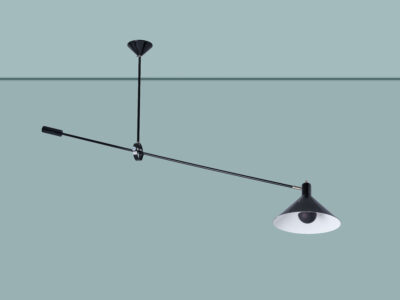
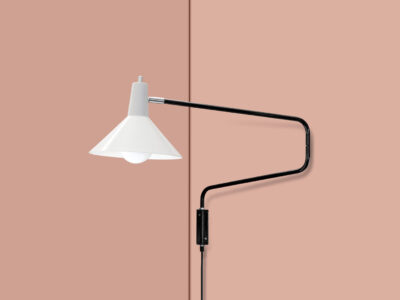
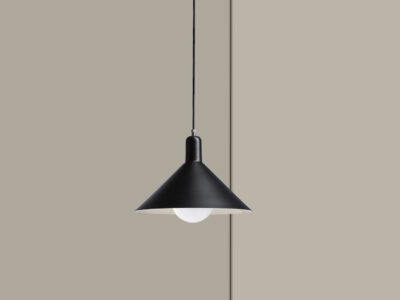
Mid-century design of Hoogervorst, with a twist to the future and the possibility to equipped them with the best possible lighting technology.
Past meets future!
Michel Klein
Founder, ANVIA BV